Posted by Brisk Brisk
Filed in Shopping 4 views
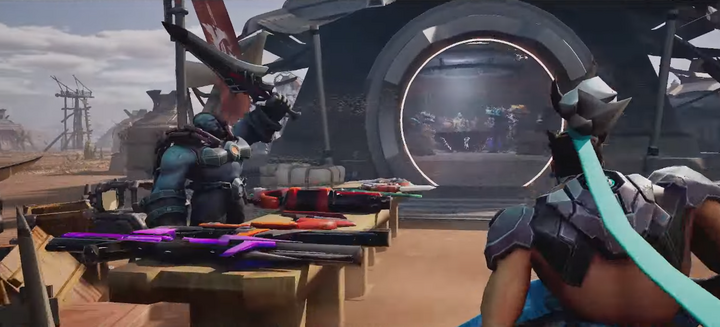
In Warborne: Above Ashes, combat is not just about raw damage output or gear score superiority. It is a layered system built around timing, resource control, positional awareness, and increasingly, stack-based momentum mechanics that reward players who understand how to chain abilities rather than simply spam them on cooldown. Among the many weapon archetypes shaping the current meta, Greatswords stand out as one of the most impactful for players who enjoy high-risk, high-reward melee engagements.
At the center of this emerging playstyle is the Voidblade Greatsword, a weapon that embodies everything Warborne Above Ashes Solarbite does best: explosive burst potential, layered crowd control, and a deep interaction system tied to its unique mechanic—Sword Momentum.
This article explores how the Voidblade works, how its signature skill defines momentum-based melee combat, and why it is becoming a cornerstone of both PvP and structured PvE group play.
The Identity of Greatswords in Warborne: Above Ashes
Greatswords in Warborne: Above Ashes are designed as hybrid frontline weapons. They are not purely defensive like shields, nor purely assassin-like weapons that rely on stealth or rapid burst combos. Instead, they occupy a middle ground built around:
Sustained melee pressure
Wide arc cleave damage
Strong crowd control utility
Momentum-driven scaling effects
This makes them particularly effective in chaotic group fights where positioning constantly shifts and players must adapt quickly.
However, not all Greatswords are built the same. While some emphasize raw damage amplification or lifesteal mechanics, the Voidblade Greatsword takes a different approach. It is built around control layering and conditional effects that scale with engagement consistency.
Voidblade Greatsword – The Core Concept
The Voidblade is an Epic-tier Greatsword that revolves around one key idea: Sword Momentum stacking.
Rather than dealing flat damage in predictable bursts, the Voidblade rewards players who continuously engage enemies, maintaining pressure to build momentum stacks. These stacks then modify the effects of its key skill, transforming it from a simple damage ability into a powerful control tool.
At its core, the Voidblade is not just a weapon—it is a tempo system.
Players who understand when to engage, when to disengage, and when to cash in their momentum stacks gain a significant advantage in both duels and large-scale skirmishes.
Signature Skill: Force Pierce
The defining ability of the Voidblade Greatsword is its skill:
Force Pierce
This ability unleashes concentrated sword energy, dealing:
300% Physical Damage (Damage Rate)
Additional effects based on Sword Momentum stacks
At first glance, Force Pierce appears to be a straightforward high-damage strike. But its true strength lies in how dramatically it changes depending on momentum state.
Let’s break down its scaling behavior.
Sword Momentum System Explained
Sword Momentum is a stacking mechanic generated through consistent combat engagement. While exact generation methods vary depending on build and rotation, it is generally gained through:
Landing basic attacks
Successfully hitting skill-based combos
Maintaining melee proximity without disengaging
Participating in chained engagements
Momentum decays if the player disengages for too long, encouraging aggressive but calculated play.
The Voidblade’s Force Pierce then consumes or reacts to these stacks, altering its secondary effects:
1 Stack – Basic Control Trigger
30% Slow for 2 seconds
At low momentum, Force Pierce functions as a light disruption tool. The damage is already strong, but the added slow effect provides just enough control to prevent immediate counterplay.
This stage is ideal for:
Initiating duels
Catching fleeing enemies
Interrupting positioning resets
It is not overwhelming, but it sets the foundation for escalation.
2 Stacks – Control + Silence Layer
30% Slow for 2 seconds
1 second Silence
At two stacks, the Voidblade begins to transition from a damage weapon into a control threat.
The addition of Silence is crucial in Warborne: Above Ashes, where many builds rely heavily on chained skill rotations or defensive reaction abilities. A single second of silence can completely break an opponent’s rhythm, especially in PvP.
This version of Force Pierce is particularly effective against:
Mage-style casters
Hybrid sustain builds
Mobility-heavy assassins relying on escape skills
It turns the Voidblade into a tempo disruptor rather than just a damage dealer.
3 or More Stacks – Full Control Break
30% Slow for 4 seconds
2 seconds Silence
At maximum momentum, Force Pierce becomes a fight-defining ability.
The extended slow duration combined with a two-second silence creates a powerful control window that can decide entire engagements. It effectively prevents:
Skill rotations
Escape sequences
Repositioning tools
Defensive cooldown chaining
At this stage, the Voidblade is no longer just participating in the fight—it is controlling it.
A well-timed max-stack Force Pierce can lock down a priority target long enough for allies to collapse or finish the engagement entirely.
Combat Philosophy: Why Momentum Matters
The Voidblade is not designed for reactive gameplay. Instead, it rewards predictive aggression.
Players must constantly ask:
Can I maintain stacks before committing Force Pierce?
Is it better to wait for maximum control potential?
Will I lose momentum if I disengage now?
This creates a risk-reward loop where hesitation can be just as punishing as over-commitment.
Unlike burst weapons that rely on cooldown windows, the Voidblade’s effectiveness is directly tied to player discipline and engagement management.
PvP Applications: Dominating Small and Large Scale Fights
In PvP scenarios, the Voidblade shines most in chaotic mid-range melee combat.
1v1 Duels
In isolated fights, the Voidblade excels at forcing opponents into unfavorable trade patterns. Even at low stacks, the slow effect prevents kiting, while higher stacks can completely shut down counterplay.
The key strategy is to:
Build momentum safely
Force enemy defensive cooldowns
Cash out with Force Pierce at a decisive moment
Group Skirmishes
In larger fights, the Voidblade becomes a disruption engine. It thrives on targeting:
Enemy backline casters
High-value DPS targets
Escape-oriented assassins
A max-stack Force Pierce in a clustered fight can interrupt multiple layers of enemy coordination simultaneously.
Siege and Objective Control
In objective-based combat, the Voidblade is especially dangerous around choke points. Its slow and silence combination makes it ideal for locking down narrow areas where enemy movement is predictable.
PvE Role: Controlled Burst and Elite Disruption
While PvP is where the Voidblade truly shines, it also has strong PvE applications.
Against elite enemies and bosses with interruptible mechanics, Force Pierce provides:
Reliable burst damage (300% scaling)
Interrupt potential for dangerous abilities
Temporary control windows for team coordination
However, it is less about raw DPS and more about mechanical interruption timing, making it a valuable utility weapon in coordinated dungeon runs.
Strengths and Weaknesses
Strengths
Extremely strong conditional control scaling
High burst damage at all stack levels
Excellent PvP disruption tool
Scales well in coordinated team play
Rewarding skill expression through momentum management
Weaknesses
Requires consistent engagement to maintain power
Punished heavily by disengagement or kiting
Less effective in pure ranged matchups
Timing-dependent (misuse of stacks reduces impact significantly)
Build Synergy and Playstyle Direction
The Voidblade pairs best with builds that encourage:
Aggressive gap closing
Sustain through combat (lifesteal or shielding)
Cooldown reduction for sustained pressure
Mobility tools to maintain engagement
It is less effective on passive defensive setups or ranged hybrid builds.
The ideal Voidblade player is constantly cycling between pressure and restraint, knowing exactly when to extend fights and when to reset momentum.
Conclusion: The Voidblade as a Skill Expression Weapon
The Voidblade Greatsword in Warborne: Above Ashes represents a shift in how melee weapons are designed. Rather than focusing purely on damage numbers or simple combo chains, it introduces a layered control system built around momentum management.
Its signature skill, Force Pierce, is a perfect example of this design philosophy:
At low stacks, it disrupts
At medium stacks, it disables
At high stacks, it dominates
This progression creates a weapon that rewards mastery over time, positioning, and engagement discipline.
In the hands of an inexperienced player, the Voidblade is a strong but inconsistent Greatsword. In the hands of a skilled one, it becomes a fight-controlling engine capable of dictating the flow of entire encounters.
As the meta of WAA Solarbite for sale continues to evolve, weapons like the Voidblade highlight a clear direction: combat is no longer just about dealing damage—it is about controlling tempo, reading momentum, and winning fights before they even fully begin.